On August 18, 1920 the Tennessee state government voted in favor of the 19th Amendment to the U.S. Constitution. This caused the ratification of the amendment and meant that female citizens could now vote in U.S. and state elections.
The leader of the local chapter of the Women’s Suffrage Association was Carrie L. Hamilton. She was a very active community member involved in much of the social life of the town. Mrs. Hamilton was a leader of the local Eastern Star organization, often serving in state-wide office. She also belonged to the Grange, Brattleboro’s Woman’s Club and the Daughters of the American Revolution.
Carrie Hamilton moved to town in 1894 with her husband, Dr. Fremont Hamilton, and her two year old son. They purchased the former Carpenter Mansion on the point of land between Linden Street and Putney Road. A few years earlier the Carpenter’s had donated the southernmost section of their property to the town so the Wells Drinking Fountain could be placed at the head of Main Street.
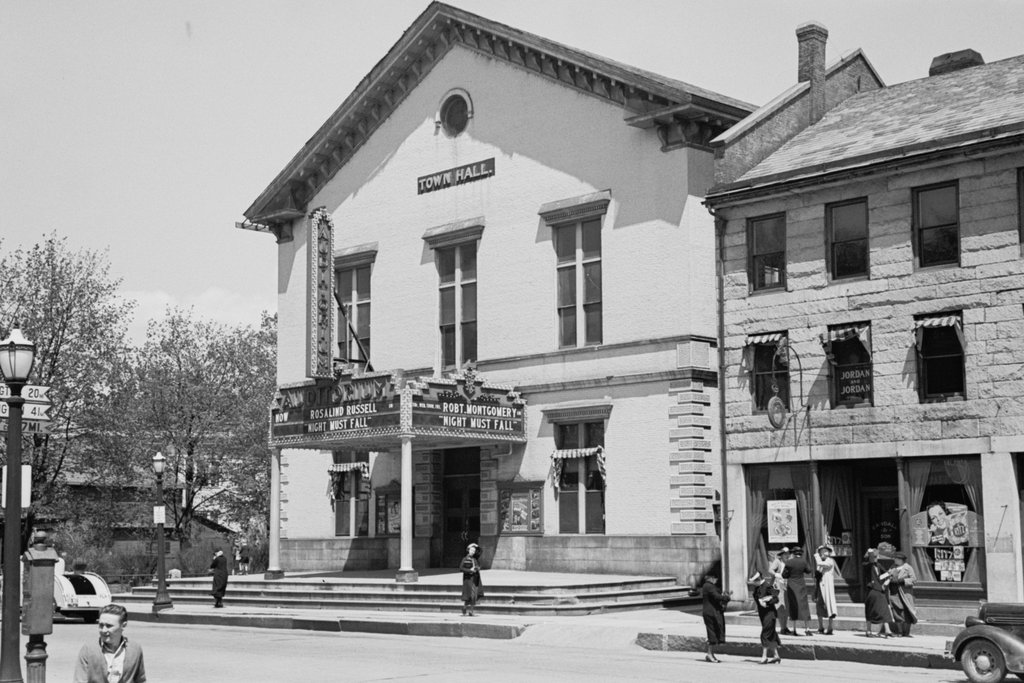
After the 19th Amendment had been ratified there was a great deal of voter activity in town. The state primary was scheduled for mid-September and Carrie Hamilton led the first women’s voter registration drive. The highlight of the drive was a Saturday evening meeting in the Town Hall where over 300 women and a dozen or so men attended.
The Brattleboro Woman’s Suffrage Association invited local women to Festival Hall in the town offices. Anyone who wanted to learn about the voting process and receive the Freeman’s Oath was welcome. The local press reported that Mrs. Carrie Hamilton, head of the woman’s suffrage association, ran the meeting and expressed her pleasure that so many women were present. Mrs. Hamilton stated that no matter what the attitude of any woman was before equal suffrage was granted, every woman now should realize her great opportunity to help along the lines of political work in the United States. The Freeman’s Oath was administered by Judge Waterman and about 365 women registered to vote.
Carrie Hamilton went on to visit local businesses in order to reach women who were not able to attend the Town Hall gathering. She brought members of the board of civil authority with her to rally working women to register and vote. As a result of the women’s voter registration efforts, 46% of Brattleboro’s primary voters in 1920 were women. An unexpected outcome was the surprise write in vote for the town’s representative in the state legislature. Carrie Hamilton received 20% of the Republican primary vote. She received the most write-in votes on the Democratic side and won the Democratic Party nomination as there was no announced Democratic candidate.
Hamilton had not campaigned but she accepted the Democratic Party nomination and was one of the first women to run for a Vermont office. Hamilton ran for state representative but lost to the male Republican candidate in the general election. She received 35% of the vote. In the small northeastern Vermont town of Orange, Edna Beard also ran for the state legislature in 1920 and was successful. She was the first female to serve in the Vermont House of Representatives and later served as a State Senator.
A few months earlier, in March of 1920, Hamilton had been asked by the Brattleboro Selectmen to serve as the town’s Overseer of the Poor. It was the Overseer of the Poor’s job to arrange for the welfare of those who could not economically take care of themselves. The Overseer of the Poor managed town programs that helped the identified needy. Brattleboro operated a Town Farm and raised taxes to help those who were struggling. It was unusual for a Vermont town to have a female Overseer of the Poor.
Carrie Hamilton served in this role until her death in 1931. In the 1931 Town Report it was said, “Great credit is due her for her untiring efforts and painstaking labor. Her work has carried her up to the late hours of the night in ministering to the wants of the poor and needy.”
Hamilton was very involved in women’s issues and the social life of the community, but she was also an accomplished businesswoman. Twenty years earlier, in 1900, she began the Crystal Springs Ice Company. She partnered with Henry Whitney, a local ice distributor, and the company began modestly.
In 1903 Hamilton bought out Brattleboro Ice Company, (the competing ice distributor in town), and combined their operations with Crystal Springs. Hamilton purchased the Frost ponds and property, and also leased the Richardson ice house and ponds. As Crystal Springs’ day to day manager, bookkeeper and treasurer, Hamilton quickly consolidated the local ice trade and formed a monopoly.
In the early 1900’s ice delivery was a necessity. Refrigeration had not yet come to stores, trains or households. Ice delivery was needed to keep goods cold. The ice harvest and storage was reported in newspapers like other crops. Here’s a quote from a January 1906 Vermont Phoenix article, “The Crystal Springs Ice Company began cutting ice yesterday on the Frost ponds. The crop is about 10 inches thick. This is as thin as can be safely handled for the summer trade. In 1904 and 1905 the ice houses had been nearly filled at this time with ice 19 inches thick. In 1903 only a small part of the crop had been harvested. That ice was 12 inches thick, but only two inches of it was fine clear ice, the rest being snow ice, and if the snow ice had not been cut the crop that year would have been a failure.”
As the years went on, under Carrie Hamilton’s management, Crystal Springs Ice Company became the largest ice distributor in Vermont. In the winter, when the work of harvesting was in progress, Hamilton was at the ponds early in the morning, remaining through the day, to oversee the work. The company also expanded to include wood delivery, moving services and trucking. The company grew to include delivery to surrounding communities, like Hinsdale and Chesterfield, as well as neighboring Vermont towns.
In 1912 “auto trucks” began to replace horse and wagon teams. A 55 horsepower 2 ½ ton auto-truck was purchased to carry ice from the ice houses to centralized transfer locations where delivery wagons would quickly load up and hit the road.
In 1914 Carrie Hamilton sold the Crystal Springs Ice, Wood, and Trucking Company to her partner, Henry Whitney. In the agreement, Hamilton agreed not to engage in a similar business in Brattleboro for ten years. The sale to Whitney and his four sons included the ice business, the wood business, a trucking business, five ice ponds, the Richardson farm, a woodlot in Marlboro, mountain stone quarries in Hinsdale, two dozen horses and two automobile trucks.
It was then that Mrs. Hamilton began serving in state-wide offices of the Eastern Star and the Grange. Her name appeared in newspapers throughout Vermont as she traveled to give presentations and promote the work of the organizations.
We recognize Carrie Hamilton this week for her leadership in the local women’s suffrage movement and acknowledge her contributions to the business world and social activism. There are few in this town’s history who have contributed more to the economic and social well-being of the community.