In 1867, shortly after the Civil War, Mary Wilkins’ family moved to Brattleboro. She was 15 years old. Her family had left Randolph, Massachusetts because her father was in the building trades and New England was suffering through a recession after the war.
Many of New England’s agricultural and factory jobs were moving west with the railroads and people were moving with them. There was no demand for new housing. In fact, many New England communities lost population after the war.
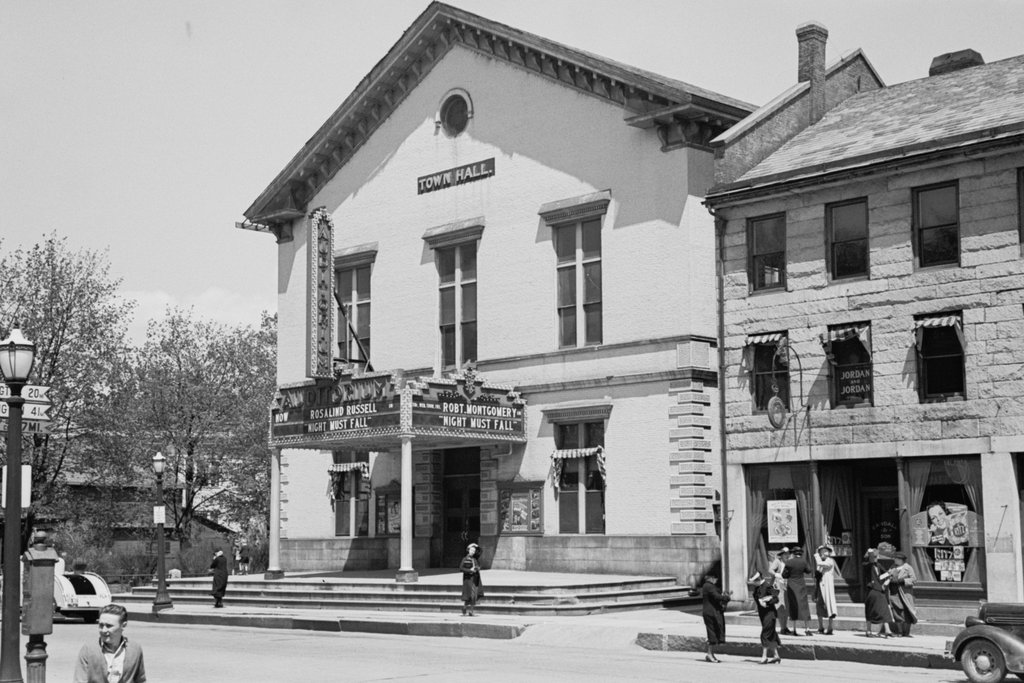
Warren Wilkins moved to Brattleboro to start a new profession. With a partner, he opened a dry goods store where the River Garden is presently located. The business was called, “The New York Store” and it focused on dry goods such as cloth and ready-made clothing.
Unfortunately for the Wilkins’, many people in Brattleboro still made their own clothes, or had a local seamstress make them, so going to a store and purchasing already made clothes was not as popular as the Wilkins had hoped.
Warren advertised in local papers and the ads focused on the urban nature of the New York City clothing style featured in his store. From the beginning, the store struggled financially.
The Wilkins’ had moved into a modest home on Chase Street, near the Brattleboro Retreat. The family consisted of Warren, his wife Eleanor, daughter Mary, and a younger daughter, Anna. While under the age of three, two other children had previously died when the family was still in Massachusetts.
Biographers described Mary as a shy, intelligent young lady who enjoyed reading more than socializing. People familiar with Mary when she was a young woman, remembered her as a quiet, introverted person whose family were strict Congregationalists. Mary began writing short stories and poems while she was still a teenager. The pastor of the Centre Congregational Church, George Walker, became an advocate for her writing and her first editor. He encouraged her early publications in children’s magazines and journals of the day.
Mary graduated from Brattleboro High School and went on to Mt. Holyoke Female Seminary for a year. She did not return to Mt. Holyoke, stating that her health suffered while she was there. She then attended the Glenwood Ladies Seminary in West Brattleboro for a year.
The Ladies Home Journal magazine later described Mary as having a slight build, standing only five feet tall, with blond hair and blue-hazel eyes. It further described her as high strung, with a nervous temperament.
Brattleboro was a writing and publishing town. When Mary Wilkins lived here there were seven publications in town that printed every day or week; three were newspapers and four were magazines.
According to one of her biographers, Dr. Perry Westbrook, “It was in Brattleboro that she first truly awakened to the beauty of nature, formed her most important friendships, made her early acquaintance with the world of books and did her first writing.”
Her father’s dry goods and clothing store was on Main Street, at the foot of High Street. Just south of her father’s business was Steen’s Bookstore. Mary spent a great deal of time next door, reading in Steen’s Bookstore.
In 1872 the dry goods store failed and Mary’s father returned to house building. The family had to leave the Chase Street home and moved into a smaller house on North Main Street, (now known as Putney Road).
During this time, Warren built three houses for local businessman George Crowell. He also built a tenement house that still stands on the west side of the Grove Street entrance to the Municipal Center.
After completing the Glenwood School program, Mary took a job as a teacher at an all girl’s school in order to help out with family finances. She did not enjoy the job and did not return after a year.
In 1873, when Mary was 21, she met Hanson Tyler. Mary’s biographers say she fell in love with Tyler but the relationship did not work out. He was in the navy and visiting family in Brattleboro. When he returned to duty Mary thought they would continue to keep in touch through letters but he never wrote to her. Mary kept a photograph of him for the rest of her life and buttons from his uniform.
In 1876, Mary’s younger sister, Anna, died at the age of seventeen. Anna was a very good singer and musician. She had begun to earn money for the family singing for a local orchestra and teaching music to younger students. The family suffered further financial hardship so Mary’s mother took a job as housekeeper for Hanson Tyler’s family. This was a live-in position so Mary and her father also moved in with the Tylers on Tyler Street.
This was awkward for Mary but the family needed to cut expenses. Mary’s father had been sickly and was not able to work much. Mary began giving piano lessons and writing short stories and poems. In 1880 Mary’s mother, Eleanor, died of a heart attack while working as Tyler’s housekeeper. She was 53. Mary took her mother’s name, Eleanor, as her middle name in order to honor her mother after her death.
Mary and her father left Tyler’s house and moved into an apartment on Western Avenue. Warren continued to look for work as a carpenter, but he also struggled with his health. In 1881 Mary received her first payment as an author, $10 for a poem that was published in a regional children’s magazine. She continued to write and earn small payments for children’s short stories and poems and was regularly appearing in the most popular national children’s magazines.
In 1882 Mary’s father decided to move to Florida, hoping it would improve his health, and Mary moved into the tenement house he had built on Grove Street. She lived there with her cat named Augustus and began writing short stories for adults. It was during her first year living alone that she began to sell short stories to the Harper’s Bazaar magazine. The editor, Mary Louise Booth, became Mary’s next literary advisor, and a close friend. With Booth’s support, Mary continued to write short stories about New England; mostly focused on the challenges facing women during the post-Civil War years. A collection of her children’s short stories and poems were published and she began to receive an income from them as well.
However, In 1883 Mary was over 30 years old, unmarried and barely getting by financially. Unfortunately, her father died while working a construction job in Florida. Here’s how the Phoenix reported his death, “Mr. Warren F. Wilkins, of this place, father of the talented young writer, Mary E. Wilkins, and himself an architect and builder of some note, died April 10th at Gainesville, Florida, where he went last year for his health.”
Mary was now the last of her family. She lived in the tenement building for the remainder of the year and continued to sell stories to Harper’s Bazaar, but emotionally she was near the end of her rope.
Mary remained in Brattleboro for the remainder of the year and sold four more short stories to “Harper’s Bazaar”. In 1884, after seventeen years in Brattleboro, Mary decided to move back to Massachusetts and live with a childhood friend. For the next eighteen years she lived with her friend Mary Wales in the Wales family farmhouse. It was during these years that Mary wrote and had published her most critically acclaimed short stories and novels.
The stories take place in New England but they have universal appeal. Her early writing focused on the lives of working class people trying to get by after the Civil War, and her later writings, in the early 1900’s, touched on transcendental themes later explored in the short stories of John Steinbeck.
Though Mary often returned to Brattleboro for visits, she never moved back to town again. According to her biographer, her Brattleboro years had a great influence on the rest of her life. A careful reading of her early stories and novels reveals that many of them have Brattleboro settings; and the surrounding countryside of Putney, Dummerston, and the West River Valley feature prominently in her stories as well.
An editor of Wilkins’ first adult book of short stories suggested the book title of “Green Mountain Stories”. Instead, the eventual title became, “A Humble Romance and Other Stories” and the publication became a best seller. In the next few years, three of the settings of her first four novels were located in and around the Brattleboro area.
Mary was a co-owner of the Waite-Wilkins building on Main Street. Over the years she returned to town to visit friends and check on her property. She wrote to a local friend, “Oh how wonderfully beautiful it was in Brattleboro. I used to walk to the head of High Street and stand and look at the mountain in winter. The beauty in Brattleboro made a great difference in my life…I think it became a part of me that remains young and defies time.”
Mary Eleanor Wilkins wrote over 220 published short stories. She explored different genres and had a very successful literary career. Mary went on to become one of the first financially successful, independent female authors in the United States. There were almost 50 different books of her writings published during her lifetime. She was most well known for her short stories and novels depicting independent New England female characters. Critics called Mary Wilkins a “pragmatic feminist”. She championed women’s rights through her writings while also keeping mainstream editors and publishers happy.
An 1892 Ladies Home Journal article featuring the writings of Mary Wilkins described her this way… “the difficulties against which she contends are largely physical. Though her constitution is apparently sound, she is small, being only five feet tall, and is very slight. She possesses the sensitive organization which accompanies a large intellectual development in such a frame. Her transparent skin, her changing eyes, sometimes seeming blue, sometimes hazel, her heavy braids of golden hair, her delicately molded features, all proclaim a singularly high-strung and nervous temperament.”
Mary Wilkins had many fond memories of Brattleboro and wrote, “More to me than the memory of the town’s natural beauty is that of the splendid humanity of the Brattleboro people.”