
Stephen Greenleaf and the Revolution

In April, 1772, Stephen Greenleaf was appointed Justice of the Peace for Cumberland County in the Province of New York. He had recently moved from Boston with his family and purchased 800 acres of land and a saw mill from Samuel Wells. The 800 acres would become the most valuable land in Brattleboro, but 250 years ago the two room home that the Greenleaf family moved into was the only building in the area now known as Main Street. The 800 acres purchased from Wells had originally been the land set aside for New Hampshire’s Governor Wentworth when the town was chartered in 1753. In 1766, after the King of England had declared that Brattleboro was really a part of the province of New York, Samuel Wells traveled to Albany and obtained New York title to the land. In the 1770’s the Great River Road, now Main Street, ran from Fort Dummer to the Wells […]
Continue reading

Stephen Bradley comes to Vermont 1779

If you are interested in early Vermont history then you should become acquainted with Stephen R. Bradley. He moved to Westminster, Vermont in 1779 and quickly became an important figure in the economic and political establishment of the state. He was born in Connecticut, but we know little of his early life. Bradley graduated from Yale in 1775 and joined the Connecticut Militia at the beginning of the Revolutionary War. He became an officer in the militia and also trained to be a lawyer. In early 1779 he resigned from the Connecticut Militia and moved to the newly established region of Vermont. Towns from the area had met in 1777 and declared their independence from New York and Great Britain. Vermont operated as its own state but New York still claimed the land as theirs. Bradley’s first Vermont court case placed him in the middle of another kind of battle. In May of 1779, while […]

Continue reading

Stephen Bradley and Vermont Statehood 1784-1791

In 1784 the southeastern corner of Vermont was in great turmoil. Two hundred and forty years ago, residents loyal to New York were in revolt against the Vermont government. At the time, the Attorney General of Vermont was Stephen R. Bradley. On January 10th he issued a document addressed to those residents refusing to comply with Vermont laws. He said that the Vermont government was willing to forget past transgressions if those refusing to follow Vermont laws would pledge allegiance to the state. This offer was not accepted by the Yorkers. Stephen R. Bradley was also a colonel in the Vermont Militia and reported the following event to the Vermont Journal publication. We have paraphrased his reporting to make it more easily understood. On Saturday morning, January 17th, I received a report that the night before a group of twenty armed men had marched from Guilford to Brattleboro and arrived at the Arms Tavern around […]

Continue reading

Samuel Wells and British Spies in the Revolution

This week we tell the story of an early local Brattleborough resident who was described by the United States Congress as a “perfidious man”. In 1730 Samuel Wells was born in Deerfield, Massachusetts. That’s about 25 miles south of here. He was a tavern keeper in Deerfield and also served in the Massachusetts militia during the French and Indian War. Like many war veterans, as the conflict was winding down, Wells decided to move into the northern frontier territory that had recently been part of the war between the Abenaki, French and British. In 1762 British colonists began to build homes and successfully claim land north of Fort Dummer. Both British colonies, New York and New Hampshire, claimed the area. The Abenaki had been fighting to remain on the land for at least 100 years but, with the end of the war, their French allies withdrew from the region and the Abenaki found it more […]

Continue reading

Samuel Gale (1775)

This week in Brattleboro History the topic will be freedom of the press versus the needs of government. In 1776 British born Samuel Gale was living under house arrest in New York City. He had been held in jail in Vermont, Massachusetts, Connecticut and New York for a year and a half because of his loyalty to Great Britain and the desire of the infant US government to suppress his voice. In 1773 Samuel Gale had moved to Brattleboro as a New York land surveyor and clerk of the local court. During the years leading to the American Revolution he was loyal to Great Britain and married Rebecca Wells, from a prominent Brattleboro Tory family. He was also a writer with outspoken views supporting the British government and it is thought that he brought the first printing press to Vermont during this time. In 1775, as the clerk of the court in Westminster, Samuel Gale […]

Continue reading

Gardiner Chandler and the Birth of Vermont.

On March 4, 1791 Vermont officially became the 14th state. How did that happen? There were a few steps involved before Vermont could join the United States. First, New York laid claim to Vermont and opposed Vermont’s petition to join the union. Westminster’s Stephen R. Bradley was one of six negotiators who met with New York’s delegation to resolve conflicts between the two governments. New York demanded compensation for its legal claim on Vermont, and also wanted clear boundaries established between the two states. These negotiations went on for ten months and ended when Vermont agreed to pay New York $30,000 for its land claim. Boundary disputes were also settled and New York negotiators signed a document relinquishing any claim to the lands of Vermont on October 7, 1790. Second, the Congress of the United States met in Philadelphia to consider Vermont’s admission to the union. In order for this to happen, Vermont needed to […]

Continue reading

Early local government (1753-1803)

The town of Brattleboro was chartered as part of the New Hampshire Grants in 1753. European settlement took hold in the region after French Indian War hostilities ceased around 1760. Then, in 1764, the King of England fixed the boundary between NH and NY at the Connecticut River and the grants of land established by the New Hampshire colony came into question. As a result, twenty settlers in the area petitioned the New York colony for township recognition. New York Governor Moore granted the township of Brattleboro and this area began to function as part of the British colony of New York. To complicate matters, in 1767 the King of England ruled that New York authorities could not harass people who produced a valid land deed from the NH government. This meant that deeds granted by both NY and NH were considered valid, even if they were in conflict with one another. People on the […]

Continue reading

Burlington and the Allen’s (1760’s-1770’s)

In the 1760’s the Burling family purchased land from New Hampshire governor Benning Wentworth. The Burling’s were land speculators and had hoped to make money by re-selling the land to others who were interested in settling in the recently established New Hampshire Grants. Unfortunately for the Burling’s, the King of England ruled that New Hampshire did not have the right to sell any land west of the Connecticut River, so the Burling’s were worried that their large land investments were illegal and worthless. The Burling’s sent representatives to England in hopes of convincing the King that he should reconsider and recognize the New Hampshire Grant land titles. However, the King did not agree with the Burling’s. This meant it was unclear as to who really owned the land east of Lake Champlain and west of the Connecticut River. Was the land New York’s or New Hampshire’s to sell? The Burling’s were worried that they would […]

Continue reading

Battle of Bennington Revised History (1843)

In 1843 the local paper, The Vermont Phoenix, published a revised history of Vermont’s influence during the Revolutionary War. The events in the Revolutionary War that were up for reinterpretation concerned Brattleboro and the Battle of Bennington. In 1843 the War for Independence had been over for 77 years and people thought they knew what had happened. History books had written about the reasons and outcomes of the war but new information was coming to light from sources that had not previously been represented in the documentation concerning the Revolutionary War. History books had long established that the Battle of Bennington, between the British and the Americans, was one of the turning points of the war. The Americans won the battle capturing, killing and wounding almost 1000 British soldiers. The British objective of the battle had been to seize as many supplies…including food, horses, cattle, wagon and oxen from the Vermonters as possible. The British […]

Continue reading

Battle For New England

Bennington Battle Day is on August 16th. It has been an official state holiday since 1913, but many communities have been celebrating the day since 1777. The holiday remembers a time when New England governments joined together to repel an invasion of British soldiers and their mercenaries during the American Revolution. In July, 1777, it had been a year since the Declaration of Independence was adopted by representatives of the thirteen British American colonies. Great Britain planned to break the rebellion by cutting New England away from the rest of the newly declared United States of America. According to historian James Butler, the British government thought isolating New England from the rest of the North American continent would quell the colonial insurrection. American military leader George Washington believed the British Empire would attack Boston, and invade from the sea. However, British forces began to arrive in Canada during May and, by mid-June, they launched an […]

Continue reading
flatboat image

How Did Flatboats Work?

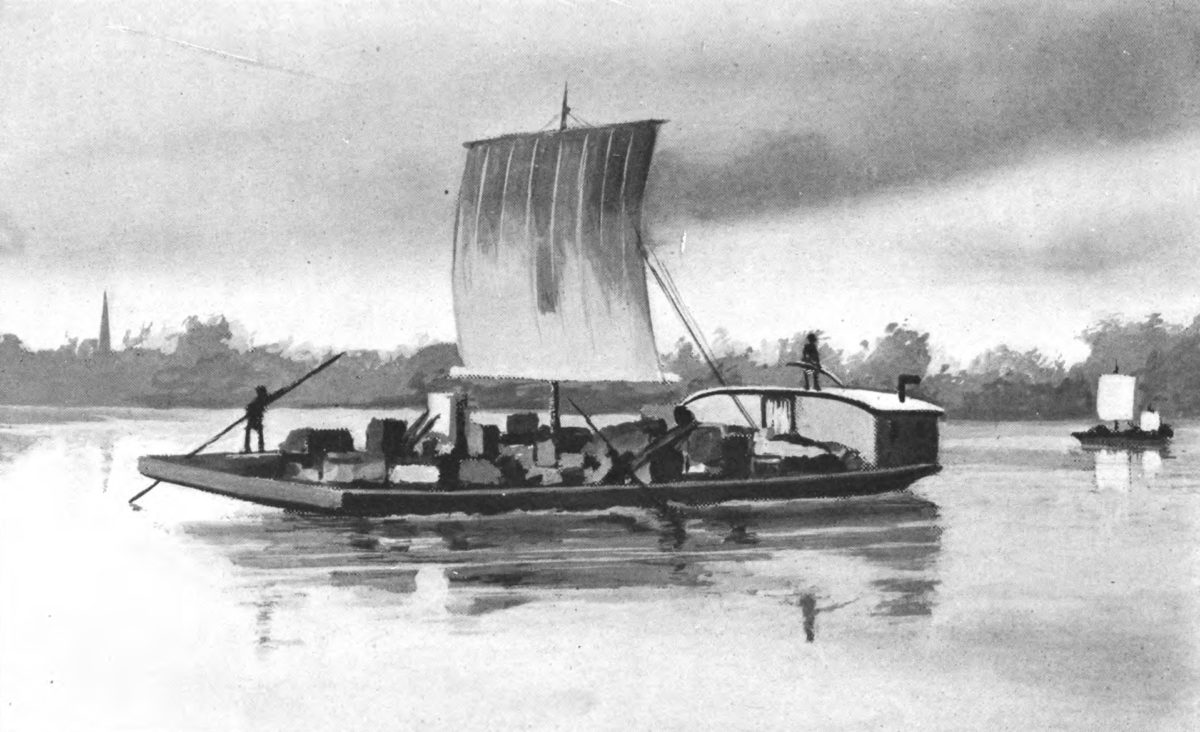
This week in Brattleboro history we are going to focus on early trade and transportation. Before interstate highways and train rails there was the Connecticut River. The Abenaki used the river to trade tools and goods throughout New England. When Europeans arrived in the 1700’s, they too, wanted to move goods along the Connecticut River. However, falls in Hadley and Turner’s Falls limited the amount of goods that could be moved along the river at one time. Most merchants looking to move goods into Vermont chose to use oxen and carts. This was slow and expensive. In 1795 a canal was built around the falls in Hadley, Mass. and in 1798 a canal was completed around Turner’s Falls. This opened up the ability to ship goods from Brattleboro to Hartford, Connecticut, and then to the Atlantic Ocean. Brattleboro’s John Holbrook was the first businessman in the area to take advantage of the canals and began […]

Continue reading

Log Drives

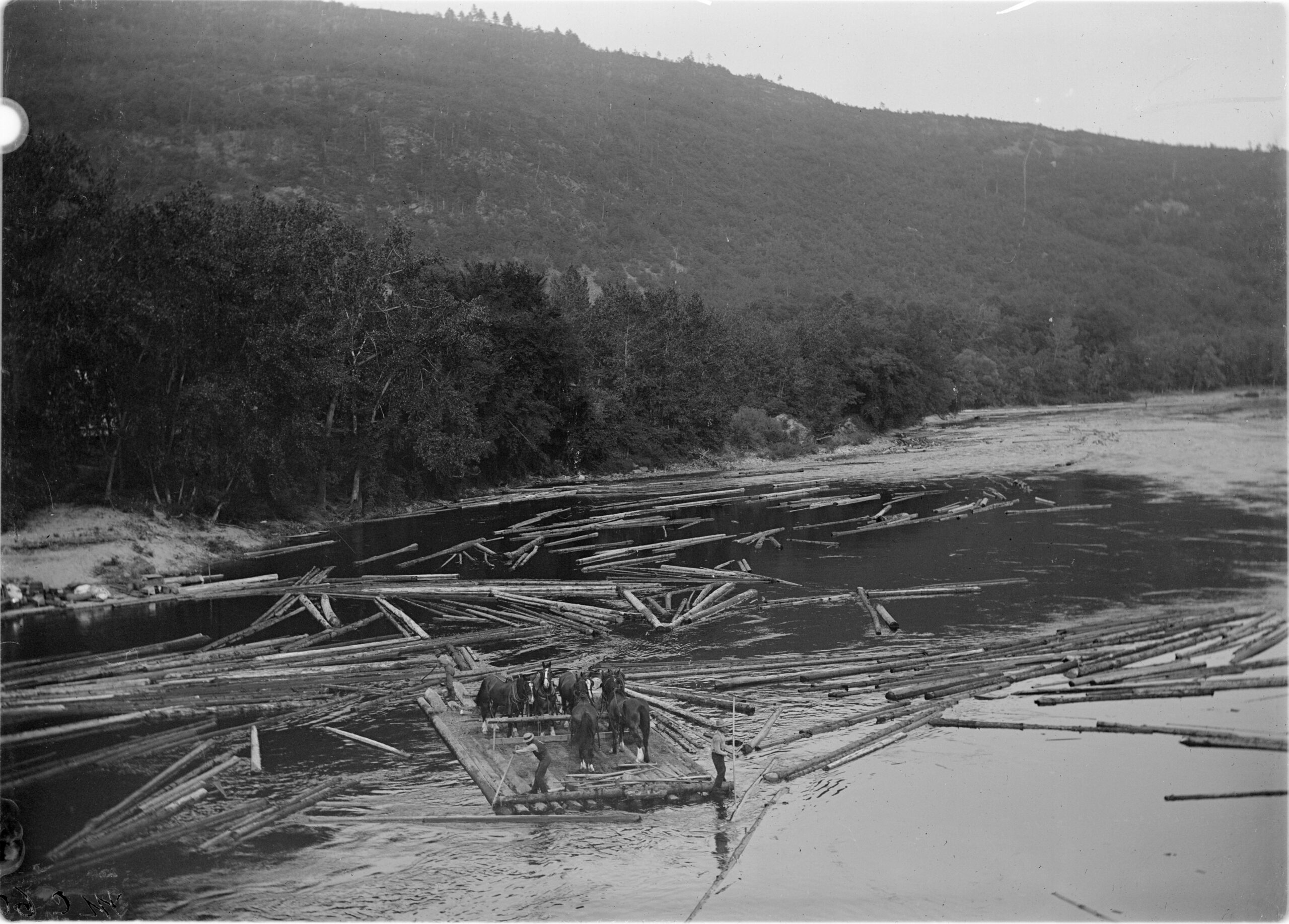
In March of 1916 the Brattleboro Reformer ran an article explaining that the great Connecticut River log drives that had impacted our region since 1869 were done. For 45 years the river towns witnessed log drives that began in late March and ended in early September. Those log drives were over. In 1915, 500 lumbermen guided 65 million board feet of full-length tree logs from the northern reaches of the Connecticut River in New Hampshire and Canada to the Mt. Tom Sawmill just south of Northampton, Massachusetts. It took five months for the logs to reach their destination. There were many economic reasons that brought about the end of the log drives. Extensive logging had been going on along the river for 45 years. The remaining trees were getting smaller. It took three times as many individual logs to get the same amount of board feet as was produced in 1885. In other words, it […]

Continue reading