Clarina Howard was born January 25, 1810 in West Townshend, Vermont. Her parents enrolled her in the local school and she had a great deal of success, performing well, and graduating high school as the valedictorian. All of the other graduates were boys. After graduation her parents introduced her to Justin Carpenter. He was ten years older than she and a college graduate. Clarina had enjoyed her education, but her family expected her to marry. At the age of 20 she married Justin.
They moved to Manhattan and lived on the dowry her family had provided Justin upon their marriage. She went to New York City willingly, valuing his career over her own. She was interested in writing literature but gave the dream up in order to move to New York. They had three children. Justin began a newspaper and a girl’s boarding school, both of which failed and cost the family most of Clarina’s dowry. Clarina was forced to work. She took multiple jobs, working at a hat shop, teaching and running a boarding house. Despite her best efforts, she often struggled to feed and clothe her children. As Justin’s business ventures failed, he became abusive towards Clarina and their children. Clarina found that legally she had no power to stop Justin’s behavior. He could abuse his family and fail to provide for their well-being, and according to New York law, Clarina could do nothing.
The abuse continued and Clarina fled back home to Vermont with her children. Leaving Justin caused a massive amount of trouble. Clarina wanted a divorce, but in 1840, it was very difficult for a woman to get a divorce. Vermont was one of the only states that allowed divorce, but cruelty had to be proven and the cruelty had to have been committed in Vermont. Clarina took her case to court in Brattleboro and found that she could not get a divorce under the current laws. She fought the court system and after three years her divorce was granted. Finally getting justice in the court sparked her interest in participating in public life and arguing for the rights of others.
The divorce had brought shame to her family and she lost her social status in the community. In order to work through her frustrations, she began to write and send her writings to the local paper, The Windham County Democrat. She wrote poems, short stories and essays about women’s lack of rights in society. The paper published many of her writings and eventually hired her to write for the paper every week.
In 1843 Clarina married the publisher of the newspaper, George Nichols. George was much older than Clarina and his health began to fail. Clarina became the editor of the paper and began her career as a political journalist and supporter of social justice. She wrote against slavery, she wrote against children’s labor, she wrote against easy access to alcohol. She wanted all people to be free and equal. She felt the laws of the 1840’s favored white men and made it hard to be a woman, person of color, or a child. She thought access to alcohol should be banned, or limited, because men could become abusive if they had consumed too much.
Her writings led to a change in Vermont law for married women. In 1847 the Vermont Legislature gave married women the right to own property, write their own wills and protect them from the debts of their husbands.
In 1851 Clarina went on the national stage for women’s rights by giving a speech at the 2nd National Women’s Rights Convention in Worcester, Massachusetts. She argued for women’s property rights and the right of women to leave abusive relationships.
In 1852 she was the first woman allowed to speak in front of the Vermont Legislature seeking the right for women to vote. The legislature applauded her presentation but did not grant women the right to vote in local school elections until 1880.
In 1853 Clarina spoke at the National Women’s Convention in New York City. Her famous line, repeated by many women and reprinted often, was “as a woman in this country I am deprived of the power to protect myself and my children”.
She became a popular speaker throughout New England and argued effectively for women’s rights, temperance and the abolition movement.
In 1854 she moved her family to Kansas, where she supported the Free Soil movement and worked for women’s rights. She helped ensure that married women’s property and custody rights were included in the Kansas constitution. She became known as the “mother of Kansas” as she fought for women’s and children’s rights.
During the Civil War, she and her daughter worked in Washington, D.C. at a home for freed black women and children. One of her sons moved to California and she went with him and advocated for women’s equality until her death at 75.
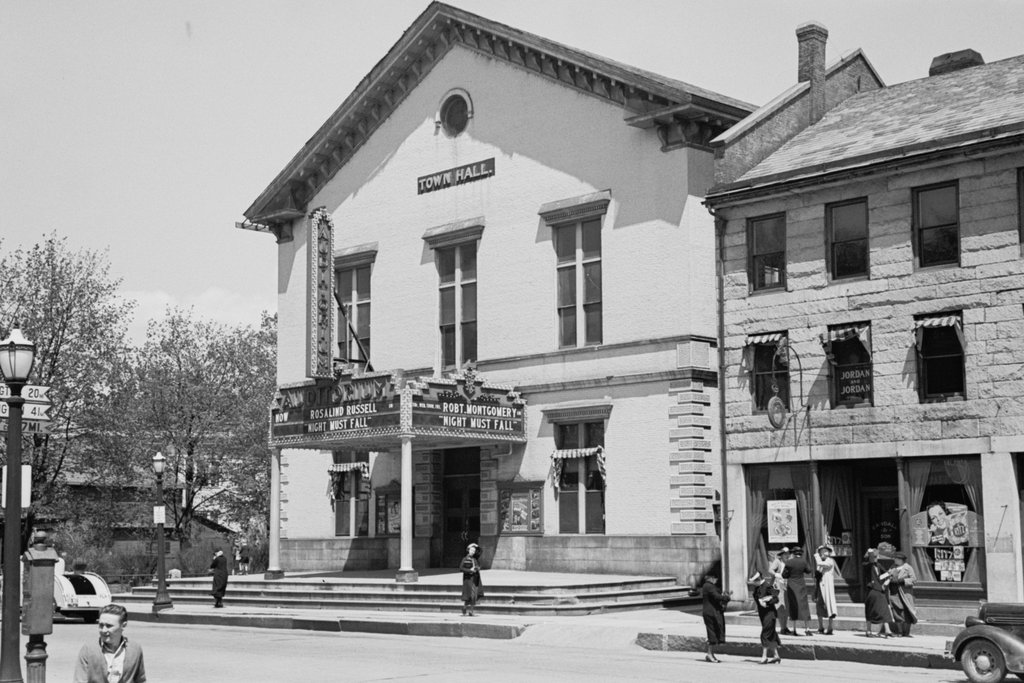
Clarina Howard Nichols began her crusade for women’s, children’s and African American rights here in Brattleboro. Her own experience led her to believe equality for all, under the law, was the right of every American.