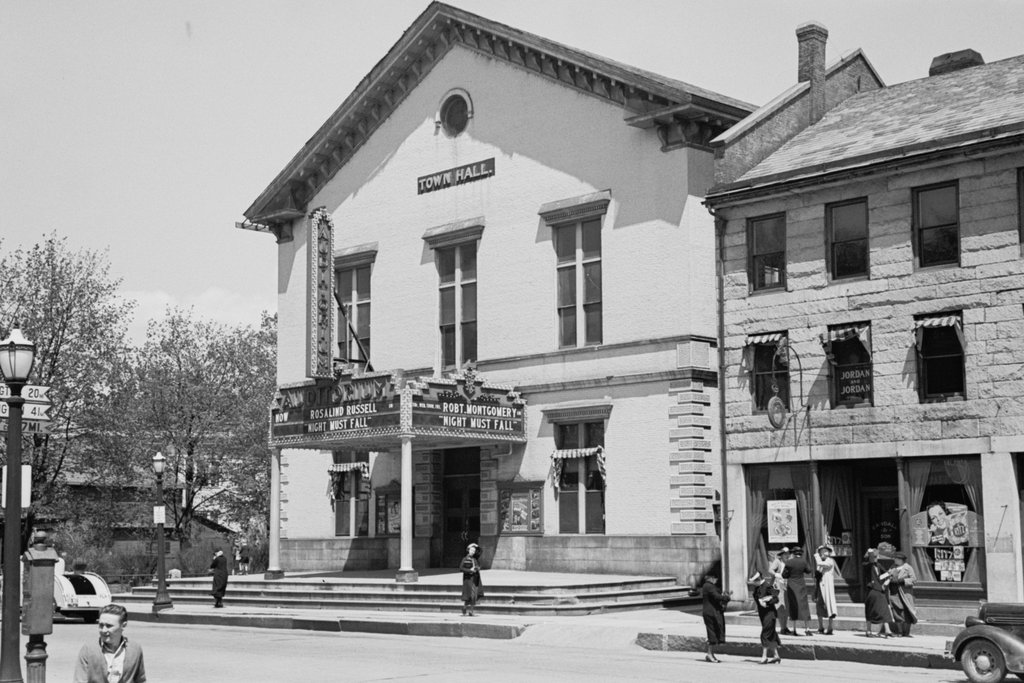
The Arms Tavern was located where the Retreat Farmhouse is now. In January, 1784 the tavern was surrounded by armed men who fired musket balls and buckshot into the building. Two men inside the tavern were wounded from the attack. This was one of many military actions that took place during the Great Cow Wars and was the catalyst for finally bringing the conflict to a close. You may not have heard of them, but the Great Cow Wars were a series of local confrontations that partially overlapped with the larger American Revolution.
From 1779 to 1784 this region of the Connecticut River Valley was in constant conflict. Many landowners were not interested in becoming citizens or taxpayers of the newly declared Vermont Republic. Settlers who had moved into this area during the previous twenty years were faced with the choice of declaring loyalty to New York, Vermont, Great Britain and/or the United States. Whichever side they chose, settlers knew they had neighbors who were on the other side of the political fence.
Two opposing governments were operating in what is now Windham County. In 1766 the New York colony declared this region Cumberland County and established a sheriff and court system. In 1778 the newly declared Republic of Vermont established a competing government structure that also included a sheriff and court system. New York had been recruiting for its militia since 1773 and many locals belonged to the organization.
In February, 1779 the Vermont Legislature passed a law forming the Vermont Militia. A draft was established to defend the northern frontier of Vermont against British and Indian attacks. Any draftee who refused to serve in the Vt. Militia was subject to a fine or prison. Property, including cows, could be seized in order to settle the fine. Many of those who considered themselves New York citizens, and did not recognize the authority of Vermont, refused to comply with the law. Some of the men were already serving in the New York Militia.
In April, 1779 Vermont began confiscating the cows of those who refused to comply with the draft. James Clay and Benjamin Wilson of Putney each had a cow seized by armed Vt. officials. Approximately 100 local Yorkers, led by an officer of the New York Militia, used the threat of violence to take back the cows. This was the beginning of the Great Cow Wars.
Ira Allen then ordered the arrest of 44 Yorkers who participated in the cow rescue. They were from Brattleboro, Vernon, Dummerston, Putney, and Westminster. Many; like Micah Townshend, John Sargent, Stephen Greenleaf, Joseph Goodhue, John Kathan, Samuel Root, Benjamin Butterfield, and Timothy Church, were highly respected members of the community.
Confiscation of cows was part of a larger effort to destroy the economic well-being of those loyal to New York. When people refused to recognize the laws and taxes of Vermont then their land, buildings and property were subject to seizure by Vermont officials. Continued opposition to Vermont’s government led to jail time or banishment from the state.
Throughout the summer of 1779 cows and heifers continued to be taken and Yorkers appealed to New York governor Clinton and the U.S. Congress for help in defying the new government of Vermont. However, both New York and Congress seemed to have their hands full conducting the American Revolution and pushed the Vermont conflict to the back burner. Some Yorkers, sensing little support from New York, switched sides and pledged allegiance to Vermont.
In 1780 approximately 25 Yorkers were forced into Vt. military service. Those who refused lost their land, property, and served time in jail. In 1781 and 1782 things got even more complicated. Many Yorkers believed leaders of the Vermont government were conspiring to join Vermont with Canada and the British government. They shared these fears with New York and the U.S. Congress.
In 1783 Vermont Militia were stationed in Brattleboro to quell any disturbances, enforce laws, and arrest defiant Yorkers. Between 25 and 65 Vt. Militia assisted the sheriff in nighttime raids of Yorkers homes. Men were arrested, weapons confiscated, and property taken. The Arms Tavern served as the Vermont Militia Headquarters.
During these arrests, some of the Vermont militia were excessively rough and destructive. Yorkers believed Ensign Oliver Waters was the worst offender, so in mid-January, 1784 about twenty Yorkers surrounded the Arms Tavern and threatened to fire into the building until Waters was surrendered to the group. Their goal was to bring Waters to Albany, by way of Massachusetts, where he would be tried in a New York court for abusing his authority.
Waters was captured, a wild chase through southern Vermont and into Massachusetts ensued. Many men representing Vermont, New York and Massachusetts Militias were injured during multiple confrontations. Ultimately, Waters was rescued, Massachusetts fined four Vermont Militiamen for “riotous behavior”, and the Cow Wars escalated.
Violent clashes between Yorkers and Vermont Militia continued. More Vermont Militia troops assembled in Brattleboro. Over 300 marched to Guilford and confronted a group of 40 Yorkers who continued to defy Vermont law. During this engagement, Vermont Militiaman Silvanus Fisk was shot, and eventually died, from musket fire.
The Yorkers were routed and chased into Massachusetts. Twenty Yorkers were captured and brought to the Arms Tavern. From there the prisoners were marched to Westminster. The men were tried, fined, and/or imprisoned, and property was confiscated. Vt. militia remained stationed in Windham County to make sure none of the Yorkers who had fled to Massachusetts returned to Vermont.
In March, 1784 Daniel Spicer attempted to cross into Guilford from Massachusetts at night. A Vermont border patrol, tasked with stopping Yorkers from returning to Guilford, shot and killed him. After Spicer’s death, government leaders from Massachusetts and Vermont worked to calm tensions in the area.
Despite requests from New York, the US Congress continued to take no position regarding the conflict between NY and Vermont. After years of perceived government tyranny, many Yorkers realized they would find no support for their continued opposition to Vermont. At the end of June, 1784, the last remaining Yorkers who had “been open and avowed opponents of the government of Vermont”, petitioned the Vermont Legislature to be pardoned from continued government harassment and past indiscretions. Forgiveness was extended to them for all of the crimes they had committed, including the shooting of Silvanus Fisk. The men pledged their allegiance to Vt. and the Great Cow Wars ended.