Hinsdale Bridge History – Eight and Counting…

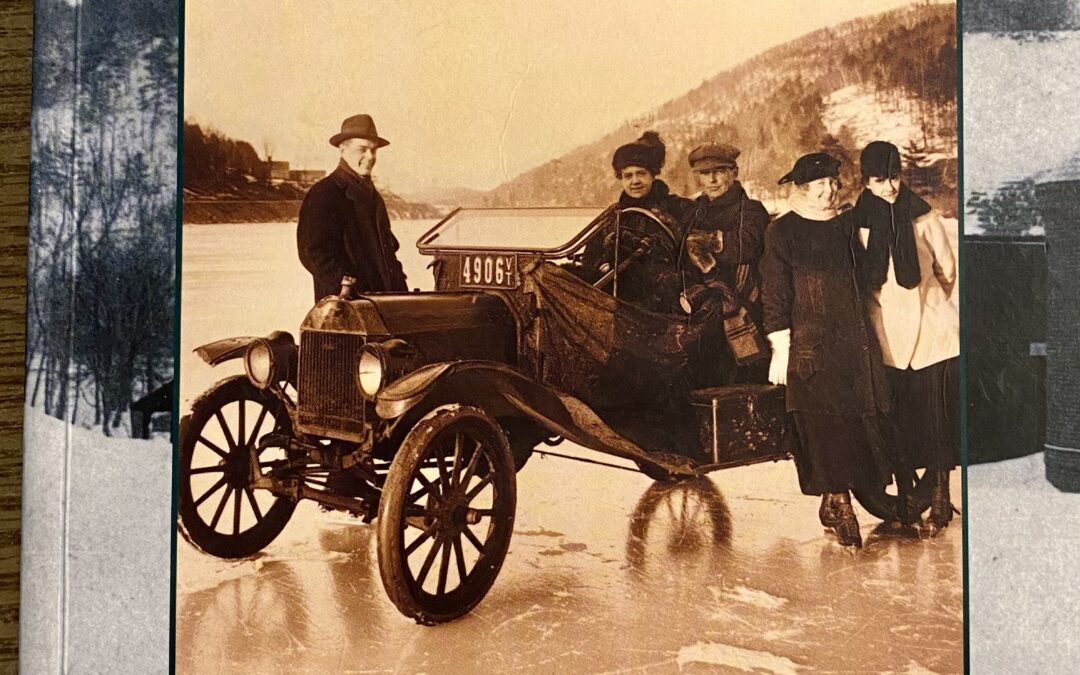
Saturday, March 28, 1920 the Hinsdale Bridge between Brattleboro and Island Park collapsed into the Connecticut River. The winter had produced a great deal of snow, a warm spell caused a quick melt, and eight to ten inches of ice were still on the river. The Brattleboro Daily Reformer gave the following description of what led to the bridge collapse. “The effect of the warm sun on the super abundance of snow in the woods was beginning to be felt…Brooks swollen by the contents of other brooks fed by smaller tributaries had been pouring into the Connecticut River for days, and the accumulated volume reached flood proportions…The ice jam at East Putney broke away about 5 o’clock, snapping off trees on the river banks as though they were toothpicks in a giant’s hand. When the river here began filling…it was known that the East Putney jam had arrived…With the water higher than ever the thunderous […]

Continue reading
John Holbrook

John Holbrook – How The River Built Brattleboro Village

Frugality, thrift and free enterprise were some of the watchwords that marked the beginning years of the United States.  Locally, John Holbrook personified these traits and was instrumental in the early development of Brattleboro’s economy. Holbrook was born in Weymouth, Massachusetts In 1761, a town a little south of Boston.  His family was loyal to Great Britain.During his teen years British officers stationed near Dorchester Heights taught young Holbrook how to survey land.  At the end of the American Revolution John Holbrook moved to newly settled Newfane, Vermont to work for Luke Knowlton. Knowlton was one of the first settlers of Newfane and was a local government official.  He had Holbrook survey much of the town.When Holbrook was twenty five he married Knowlton’s daughter, Sarah.  Holbrook opened a small general store on Newfane Hill.He took locally grown produce and hand-made goods on pack horses along the West River to Brattleboro.  From there he followed another […]

Continue reading

Log Drives

In March of 1916 the Brattleboro Reformer ran an article explaining that the great Connecticut River log drives that had impacted our region since 1869 were done. For 45 years the river towns witnessed log drives that began in late March and ended in early September. Those log drives were over. In 1915, 500 lumbermen guided 65 million board feet of full-length tree logs from the northern reaches of the Connecticut River in New Hampshire and Canada to the Mt. Tom Sawmill just south of Northampton, Massachusetts. It took five months for the logs to reach their destination. There were many economic reasons that brought about the end of the log drives. Extensive logging had been going on along the river for 45 years. The remaining trees were getting smaller. It took three times as many individual logs to get the same amount of board feet as was produced in 1885. In other words, it […]

Continue reading

Fort Dummer and the Vernon Dam

In 1976 the Brattleboro Reformer reported on the archeological dig that occurred at the Fort Dummer site along the Connecticut River.The site is about 1 mile south of downtown Brattleboro, along the Connecticut River. Fort Dummer was built on the banks of the Connecticut River in 1724. Its purpose was to protect English settlements in northern Massachusetts. There had been a series of attacks by the Abenaki and the French in this area and the Massachusetts colony built the fort to protect these settlers.Northampton and Northfield, Massachusetts were under constant threat of attack by an Indigenous leader known as Grey Lock and the French.The Abenaki viewed the English colonizers as invaders and fought in hopes of stopping the encroaching English advancements up the Connecticut River. When the fort was built it was immediately attacked by Indigenous people attempting to protect their land and way of life.Reports at the time recorded three or four English soldier deaths, […]

Continue reading

Development and Indigenous Burials

In 1922 the business community was pretty excited.  Companies along Vernon Road were having a great deal of success.  The White River Chair Company, Crosby Milling and Fort Dummer Cotton Mill had all settled into the southeast corner of town and caused a housing boom. Adding to the excitement was the announcement that Presbrey-Leland of New York was building a granite cutting shed at the location of the Maine-based Snow Flake Canning Company.  The corn canning company had located on Vernon Road in 1898 but was a seasonal employer, while Presbrey-Leland promised year round skilled union jobs. The canning company buildings were sold off and dismantled.  In their place foundations for a large granite plant were dug along the Connecticut River.  It was during this process that three human skeletons were unearthed.  For three days in a row, during October, 1922, a skeleton was dislodged from its grave about 30 feet from the riverbank and […]

Continue reading

Bridges and Floods

In 1889 a “remarkably strong and substantial” suspension bridge was built across the Connecticut River to connect Brattleboro with Chesterfield, NH. It was the culmination of a series of negotiations designed to improve east/west transportation between Brattleboro, Chesterfield and Hinsdale, NH. The bridge was built by the Berlin Bridge Company of Connecticut. At the beginning of 1888 there was a toll bridge between Brattleboro and Hinsdale, NH which traversed the island in the middle of the Connecticut River. This toll bridge crossing had existed for over 80 years and was a private enterprise. During the year it was proposed that Hinsdale and Brattleboro go in together to “free” the bridge by purchasing it from corporate owners. By eliminating future tolls it was thought that commerce between the two towns would improve and travel between NH and Vt would become more egalitarian. Each town held special votes. Hinsdale voted first and thought they should contribute $5,000 […]

Continue reading
ski tow

Brattleboro’s Burgeoning Ski Industry

In 1935 Brattleboro was well-known in the burgeoning New England skiing community. The annual Brattleboro Outing Club ski jump attracted thousands of people to the area every year. New Englanders came to Brattleboro all winter to experience winter sports opportunities. For example, in January 1935, 700 people arrived on a special “Winter Sports” train originating from New London, Conn. The 13-coach train pulled into the station at noon and the skiing enthusiasts remained until 6 p.m. The Brattleboro Outing Club provided ski jumping and slalom races on the Cedar Street hill for the visitors. In February 1935 Brattleboro hosted the New England Ski Championships. The events included ski jumping and slalom racing. It was reported that 3,000 paying customers attended the activities. Specially scheduled trains from Connecticut and Massachusetts brought 1,250 of the attendees. One of the attendees at the Championships was Nancy Reynolds, a student at Bennington College and a skiing enthusiast. She often […]

Continue reading
Steel bridge in 1903

New Bridge! Old Newspaper Accounts

Excerpts from local newspapers concerning the replacement of the covered bridge connecting Brattleboro with Hinsdale. March 7, 1902 The old Connecticut River Bridge in Brattleboro, known as the old toll bridge, had the closest call in its history and it is now in such battered and weakened condition that it will probably be a better policy to build a new bridge than to attempt to repair the old one. The damage to the bridge came through the extremely large quantity of ice in the river. The ice went out with a tremendous crash and it was forced so high in the air that it tore away the braces on both sides of the center pier of the bridge and also at the pier on the Vermont shore. Mr. Adams, who occupies barns on the island, moved his horses and wagons to the village and the people on the island were obliged to leave for safety. […]

Continue reading
George Bemis

George Bemis and the Phone Message for Coolidge

In 1954 George Bemis became the owner and manager of Hotel Brooks. In 1976 he was honored as the Chamber of Commerce’s Man of the Year. During his time in town he was a big supporter of the Brattleboro Outing Club. At the dinner, held at Dalem’s Chalet, Bemis explained his claim to fame happened in 1923. Bemis was a salesman making his monthly sales trip to Plymouth, Vt. He was in the General Store, (where the only phone in town was located) when the owner of the store answered the phone and took a call from the White House. The call was considered urgent so the owner asked Bemis to run a mile up the road in the pouring rain to get Vice President Calvin Coolidge and bring him back to the store. Bemis did this and sheltered the Vice President with his umbrella on the way back so he could take the message […]

Continue reading
Brooks House on Main Street

Brooks House

In November 1869 the St. Albans Weekly Messenger reported on the status of Brattleboro, a town that was about as far away from St. Albans as you could get and still be in Vermont. The paper was commenting on Brattleboro’s recent hard times. In October, a Whetstone Brook freshet had wiped out many of the businesses along the brook and in early November a fire had destroyed all of the businesses on the west side of Main Street between Elliot and High Streets.

Continue reading

Breweries & Prohibition

C2H5OH: BANNED!
Prohibition came to New England much earlier than it did to much of the rest of the country. In 1851 Maine passed a law banning the sale of alcoholic beverages. By 1855 all New England states had adopted a version of the Maine law, including Vermont.

Continue reading
Torger Tokle

Torger Tokle – The Babe Ruth of Ski Jumping

In February 1942 Torger Tokle retired the famed Harris Hill Winged Trophy for the first time by winning the Harris Hill ski jump three years in a row. Torger Tokle was a Ski Jumper originally from Norway who had emigrated to the United States. His nickname was “the Babe Ruth of ski jumping”. He won 42 of the 48 ski jumping tournaments in which he took part and set 24 hill distance records. Tokle won Harris Hill in 1940, 1941, and 1942 to become the first to retire the Winged Trophy. In October 1942 he joined the U.S. Army and was assigned to the ski troops of the 10th Mountain Division during World War 2. His regiment served in Italy and he taught many soldiers how to ski for the first time. Tokle’s fame grew in the Army as his cheerful, unassuming teaching style made him a hero to many, not because of his ski […]

Continue reading