Annabelle Pike and the Brooks Library (1900’s)

It was in 1882 the Brattleboro Public Library opened on Main Street.  The library was located in a room in the Town Hall and was open three days a week for 8 hours a day.  A large selection of books, and the knowledge found in their pages, was now available to just about everyone.  There had been a privately operated and funded library in town since 1821. This was actually a reading club that was only open to those who could afford membership. The idea of a public library was a clear shift in the thinking of town leaders.    Since 1842 Brattleboro readers have been privileged to borrow books: first, from its early Brattleboro Library Association and 40 years later, when the shareholders offered the books to the town, from the Brattleboro Free Library, which moved in 1887 from its quarters in the lower Town Hall to the George J. Brooks Library.     In […]
Continue reading

A History of Brattleboro’s Libraries 1842 to Present

Since 1842 Brattleboro readers have been privileged to borrow books: first, from its early Brattleboro Library Association and 40 years later, when the shareholders offered the books to the town from the Brattleboro Free Library. The free library moved in 1887 from its quarters in the lower Town Hall to the George J. Brooks Library. George Brooks spent his boyhood in Chesterfield, N.H., and made his fortune in a wholesale paper business on the West Coast. Upon his return to Brattleboro he planned and constructed the library building which was presented to the town and at the time was described as “beautiful and commodious”.   In a special meeting in 1965, Brattleboro town meeting members voted on bond issues of $243,000 as the town’s share of the building project. Other funds were raised from the sale of the property, interested community members, and organizations. The George J. Brooks Memorial Library–completed in 1967–has continued the plans […]

Continue reading

McNeill’s Brewery

BHS believes the building that became McNeill’s was constructed in 1892 and originally served as one of the fire stations on Elliot Street. The 1892 structure was a replacement for the fire station that had been there previously. McNeill’s moved into the building in 1990 and began brewing beer in January 1991. Ray McNeill Ray McNeill was very proud of his daughter and shared stories with The Brattleboro Historical Society. Ray would tell of the trajectory of daughter Eve’s career. We reminded him of a meeting between Eve and a BUHS teacher when Eve was at Mount Snow Academy. Eve needed a history course. She came to BUHS to find out whether or not she would take a Western Civilization course. The course was described to her and she responded, “I’m not doing that s….” Ray would laugh, at times uncontrollably and say, “That’s Eve.” We would remind him – that was you, also, Ray. […]

Continue reading

Hinsdale Bridge History – Eight and Counting…

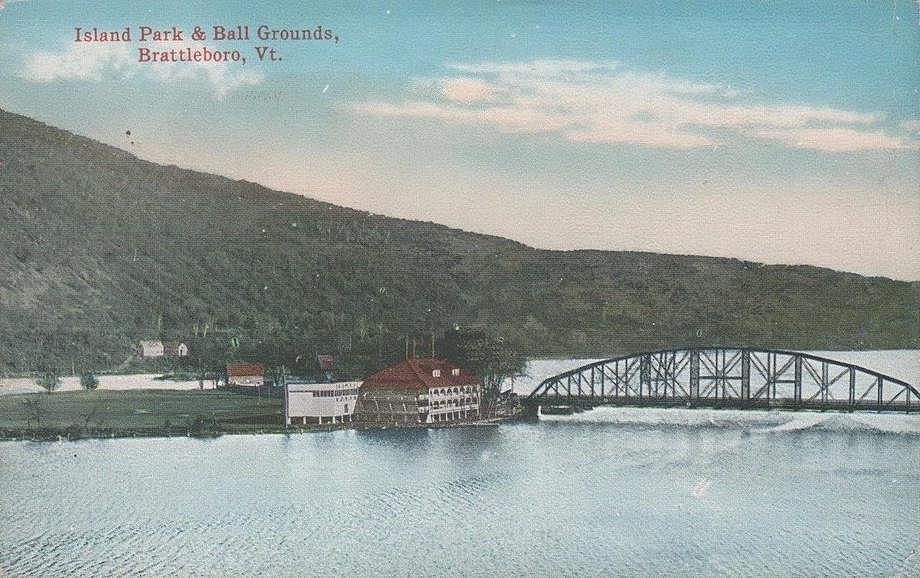
Saturday, March 28, 1920 the Hinsdale Bridge between Brattleboro and Island Park collapsed into the Connecticut River. The winter had produced a great deal of snow, a warm spell caused a quick melt, and eight to ten inches of ice were still on the river. The Brattleboro Daily Reformer gave the following description of what led to the bridge collapse. “The effect of the warm sun on the super abundance of snow in the woods was beginning to be felt…Brooks swollen by the contents of other brooks fed by smaller tributaries had been pouring into the Connecticut River for days, and the accumulated volume reached flood proportions…The ice jam at East Putney broke away about 5 o’clock, snapping off trees on the river banks as though they were toothpicks in a giant’s hand. When the river here began filling…it was known that the East Putney jam had arrived…With the water higher than ever the thunderous […]

Continue reading

Fort Dummer and the Vernon Dam

In 1976 the Brattleboro Reformer reported on the archeological dig that occurred at the Fort Dummer site along the Connecticut River.The site is about 1 mile south of downtown Brattleboro, along the Connecticut River. Fort Dummer was built on the banks of the Connecticut River in 1724. Its purpose was to protect English settlements in northern Massachusetts. There had been a series of attacks by the Abenaki and the French in this area and the Massachusetts colony built the fort to protect these settlers.Northampton and Northfield, Massachusetts were under constant threat of attack by an Indigenous leader known as Grey Lock and the French.The Abenaki viewed the English colonizers as invaders and fought in hopes of stopping the encroaching English advancements up the Connecticut River. When the fort was built it was immediately attacked by Indigenous people attempting to protect their land and way of life.Reports at the time recorded three or four English soldier deaths, […]

Continue reading

Development and Indigenous Burials

In 1922 the business community was pretty excited.  Companies along Vernon Road were having a great deal of success.  The White River Chair Company, Crosby Milling and Fort Dummer Cotton Mill had all settled into the southeast corner of town and caused a housing boom. Adding to the excitement was the announcement that Presbrey-Leland of New York was building a granite cutting shed at the location of the Maine-based Snow Flake Canning Company.  The corn canning company had located on Vernon Road in 1898 but was a seasonal employer, while Presbrey-Leland promised year round skilled union jobs. The canning company buildings were sold off and dismantled.  In their place foundations for a large granite plant were dug along the Connecticut River.  It was during this process that three human skeletons were unearthed.  For three days in a row, during October, 1922, a skeleton was dislodged from its grave about 30 feet from the riverbank and […]

Continue reading

Hinsdale Bridge

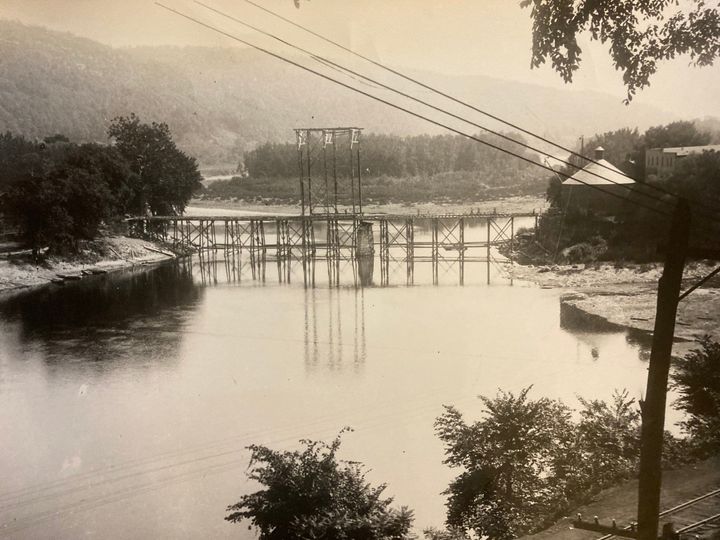
Saturday, March 28, 1920 the Hinsdale Bridge between Brattleboro and Island Park collapsed into the Connecticut River.  The winter had produced a great deal of snow, a warm spell caused a quick melt, and eight to ten inches of ice were still on the river.  The Brattleboro Daily Reformer gave the following description of what led to the bridge collapse. “The effect of the warm sun on the super abundance of snow in the woods was beginning to be felt…Brooks swollen by the contents of other brooks fed by smaller tributaries had been pouring into the Connecticut River for days, and the accumulated volume reached flood proportions…The ice jam at East Putney broke away about 5 o’clock, snapping off trees on the river banks as though they were toothpicks in a giant’s hand.  When the river here began filling…it was known that the East Putney jam had arrived…With the water higher than ever the thunderous […]

Continue reading
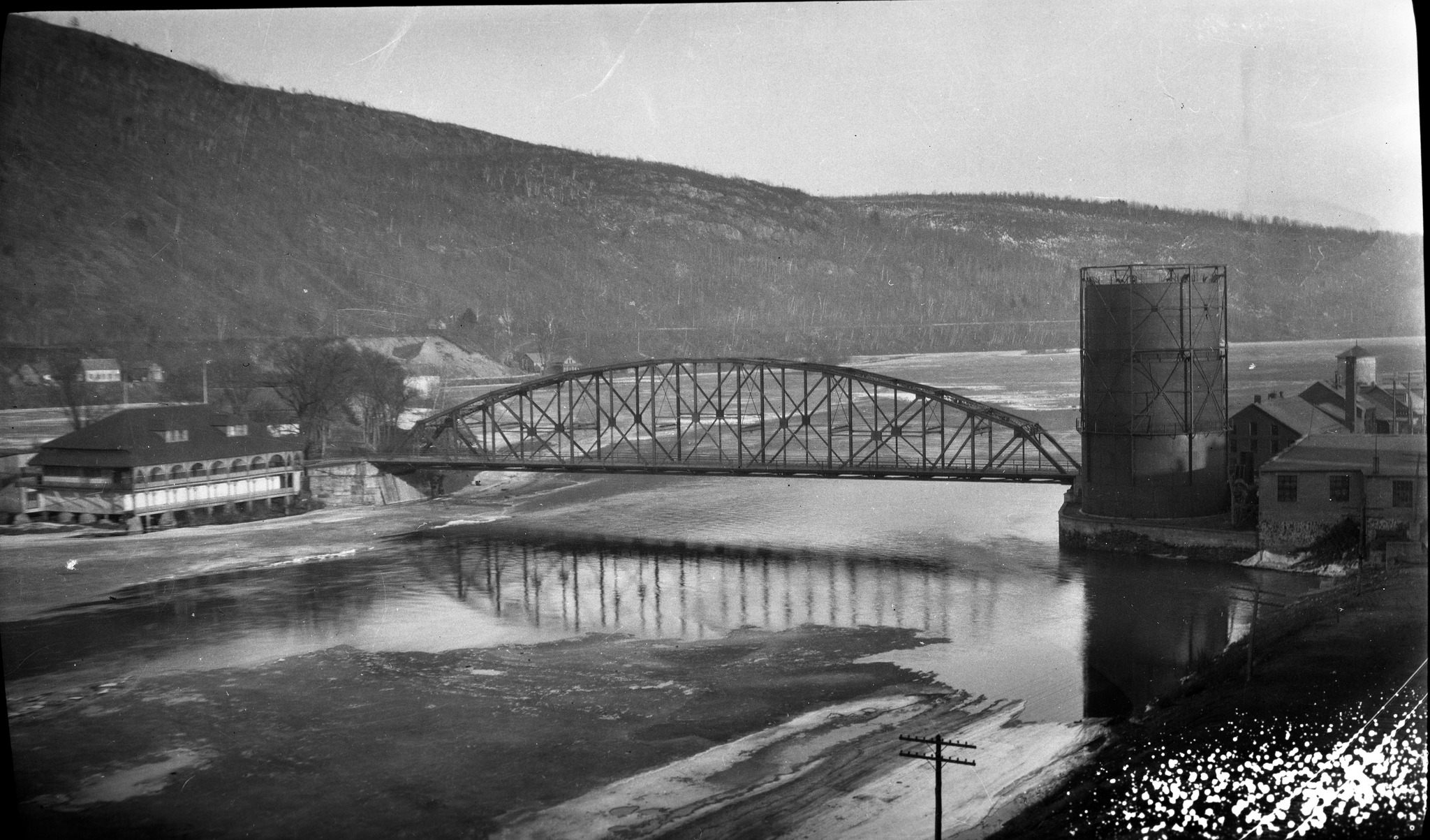
Steel bridge in 1903

New Bridge! Old Newspaper Accounts

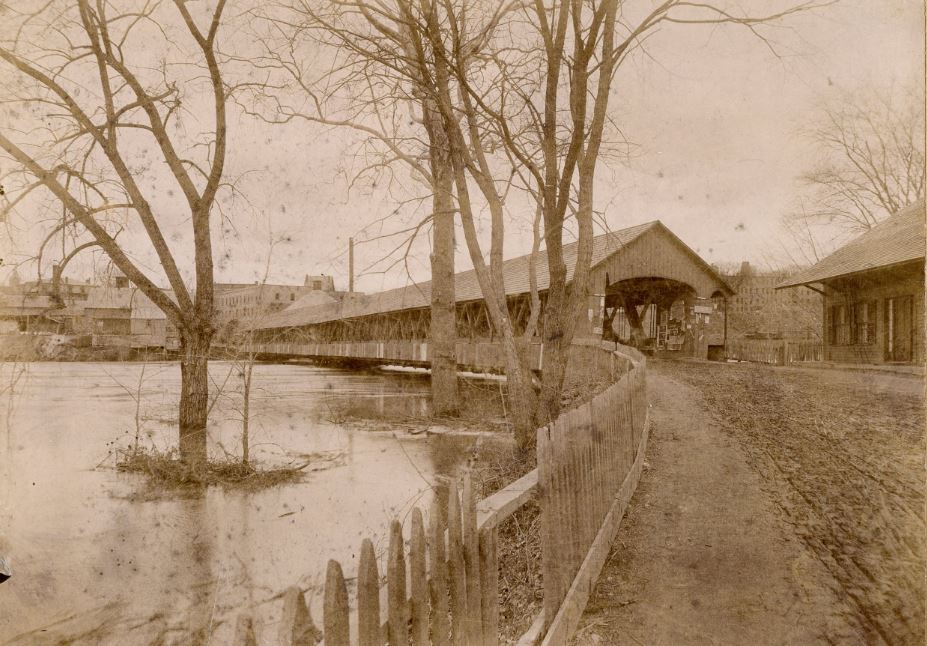
Excerpts from local newspapers concerning the replacement of the covered bridge connecting Brattleboro with Hinsdale. March 7, 1902 The old Connecticut River Bridge in Brattleboro, known as the old toll bridge, had the closest call in its history and it is now in such battered and weakened condition that it will probably be a better policy to build a new bridge than to attempt to repair the old one. The damage to the bridge came through the extremely large quantity of ice in the river. The ice went out with a tremendous crash and it was forced so high in the air that it tore away the braces on both sides of the center pier of the bridge and also at the pier on the Vermont shore. Mr. Adams, who occupies barns on the island, moved his horses and wagons to the village and the people on the island were obliged to leave for safety. […]

Continue reading
Brooks House on Main Street

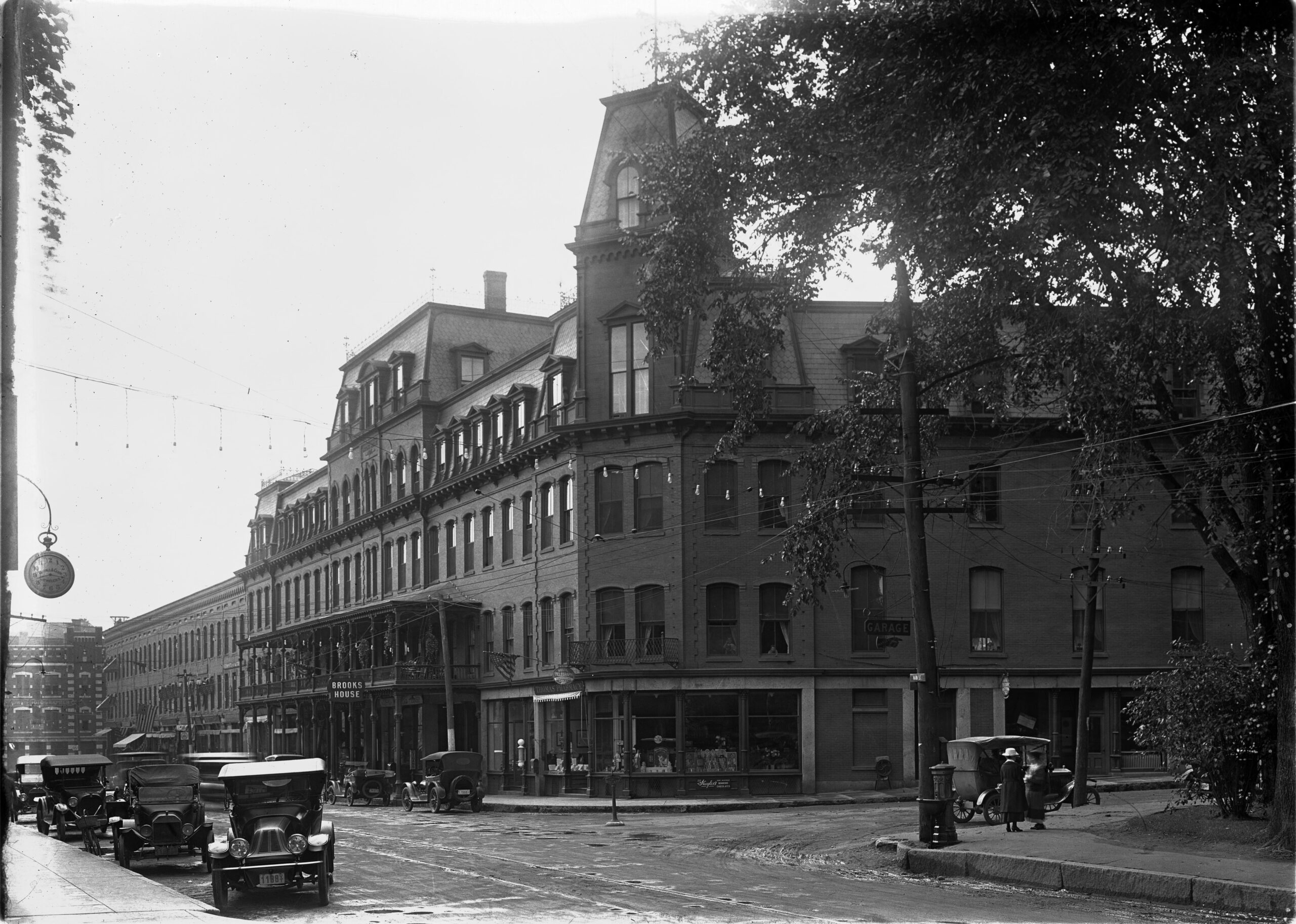
Brooks House

In November 1869 the St. Albans Weekly Messenger reported on the status of Brattleboro, a town that was about as far away from St. Albans as you could get and still be in Vermont. The paper was commenting on Brattleboro’s recent hard times. In October, a Whetstone Brook freshet had wiped out many of the businesses along the brook and in early November a fire had destroyed all of the businesses on the west side of Main Street between Elliot and High Streets.

Continue reading

Island Park – Brattleboro’s Playground

In the Connecticut River there used to be a pretty big island between Brattleboro and Hinsdale. In the 1800’s it was over 22 acres. 1862 In 1862 a Connecticut Valley flood devastated the island. The tollhouse was washed away, as was the farmhouse, and when the waters subsided about eight sandy acres of land remained. By 1874 the largest chicken farm in the area had established itself on the island with over 2000 hens and chickens. In the 1880’s Brattleboro and Hinsdale joined together, bought the toll bridge company and made the bridge connection between the two towns free and open to the public. 1800s In the late 1800’s a brewery and saloon existed on the island and the island developed a sketchy reputation. In the early 1900’s Brattleboro and Hinsdale got into a disagreement about the brewery as Brattleboro had become a dry town, while Hinsdale was a licensed town that allowed the brewery […]

Continue reading