Harris Hill

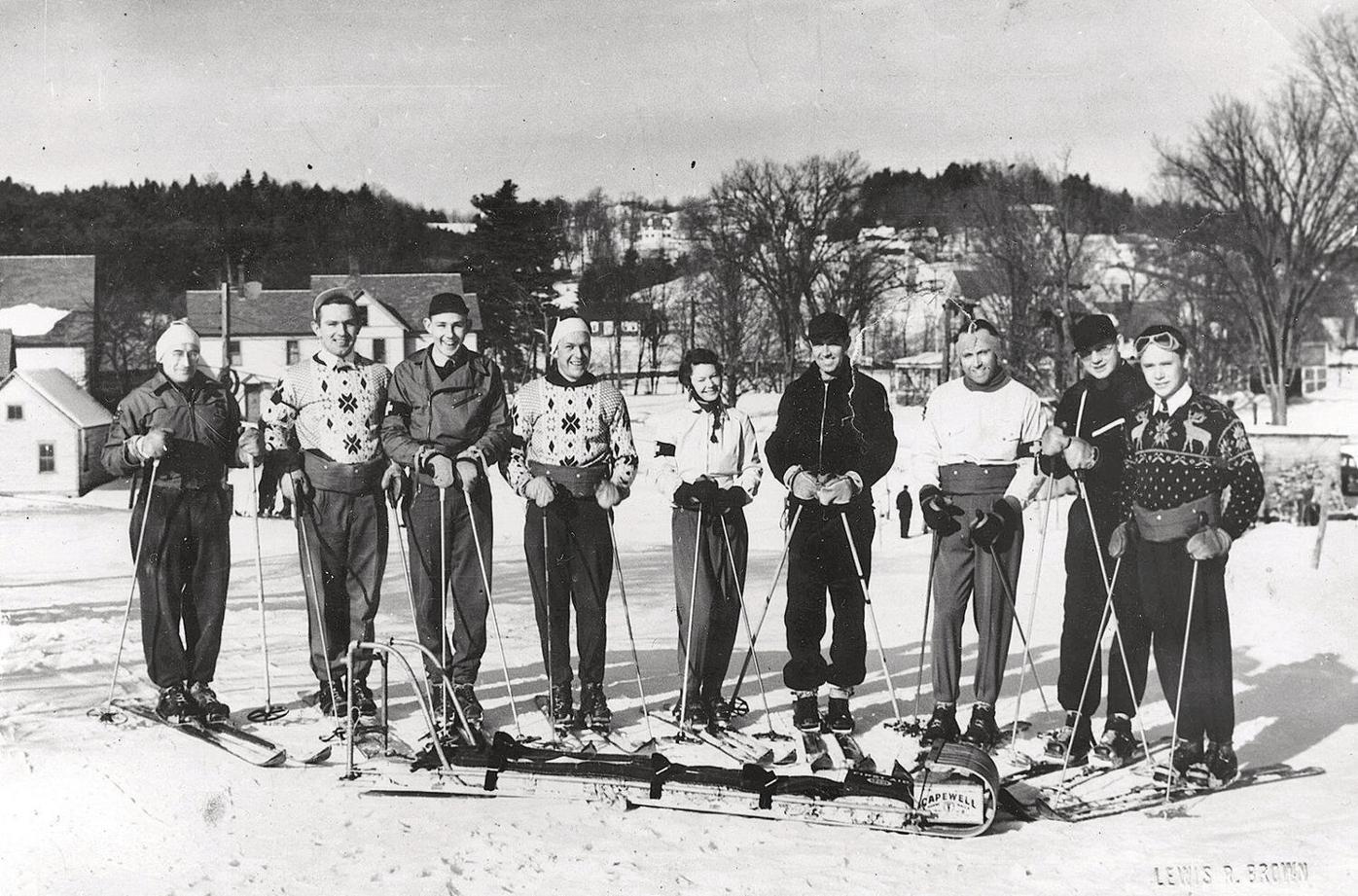
In the beginning, the hill was 740 feet long. The landing space was 250 feet with a drop from the top to bottom of 284 feet. It was a big hill and it would get bigger.

Continue reading

The Brattleboro Retreat

Go north on Main Street through downtown Brattleboro, past the library and bubbling Wells Fountain, and you’ll crest the hill onto a public park. Look through the trees and you’ll see flickers of an elegant clock tower. This clock tower watches over college-like campus of the Brattleboro Retreat, a pioneering mental health hospital that has been a cornerstone in Brattleboro since 1836. The Retreat and it’s grounds encompass more than 1000 acres along the West River, from its stately campus and adjacent farm to a networks public trails and even a haunted tower.

Continue reading

The Latchis Hotel & Theater

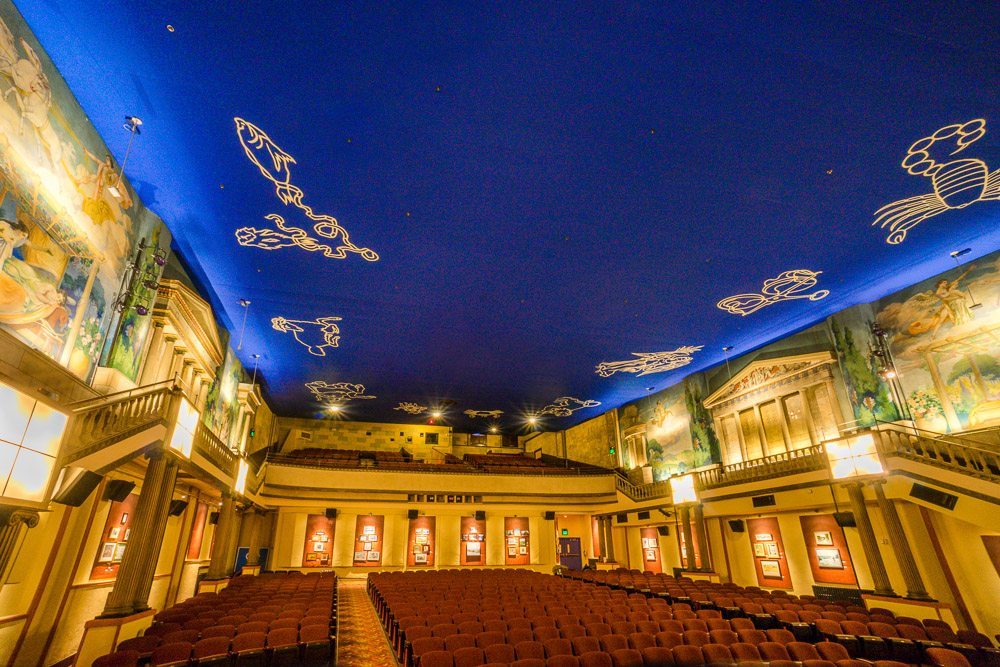
The Latchis Main Theatre has stood as is since 1938 and is a member of the League of Historic American Theatres. Bedecked with Greek murals by the Hungarian-American painter Louis Jambor, swaddled in velvet curtains, and accented with a panoramic view of the Zodiac on the ceiling, this theatre has welcomed everything from the first run of The Wizard of Oz to livecast opera from the “Met.”
Continue reading

Wells Fountain

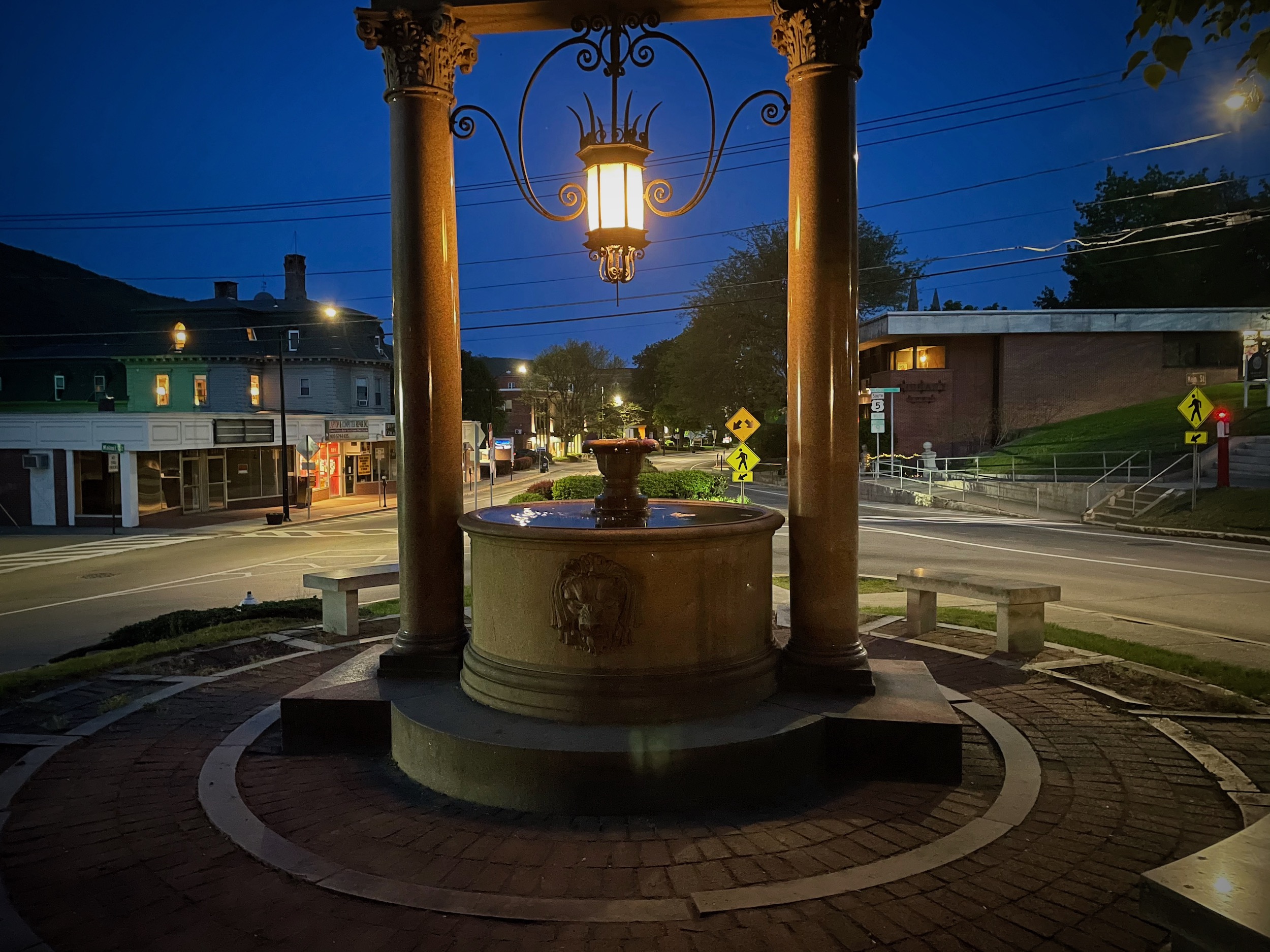
The Fountain Wells Fountain, one of Brattleboro’s best-loved landmarks, stand proudly on the northern edge of its downtown shopping district. Designed in 1890 by Brattleboro architect William Rutherford Mead (cousin to President Rutherford B. Hayes) and funded by William Henry Wells, Brattleboro native and new York businessman; this lovely granite fountain features two fierce lion head medallions on the north and south sides of a large basin. A pair of Corinthian columns supports the large lintel and electric lantern encased in graceful iron scrollwork. The Snow Angel Location Wells Fountain, also known as Wells Drinking Fountain, was built to mark the spot where Mead’s brother Larkin Mead, a nationally known sculptor, created an eight foot Snow Angel on New Year’s Eve 1856. The ephemeral angel caused such a sensation that Larkin later fashioned a marble replica that is currently on view in Brooks Memorial Library. The Move In 1986, the fountain was moved twenty feet […]

Continue reading

Indigenous Sites – Wantastegok: The Place of the River Where Things Are Lost

Since long before the advent of writing, right here in the Connecticut River Valley there have lived a people known as the Sokoki Abenaki (or, translated into English from the original Sokwakiak, “The People Who Separated”).

They are the original people of this place, and they are still here. Their native tongue, Aln8ba8dwaw8gan—the Western Abenaki language—is still extant, but greatly endangered.

Continue reading

Mount Wantastiquet

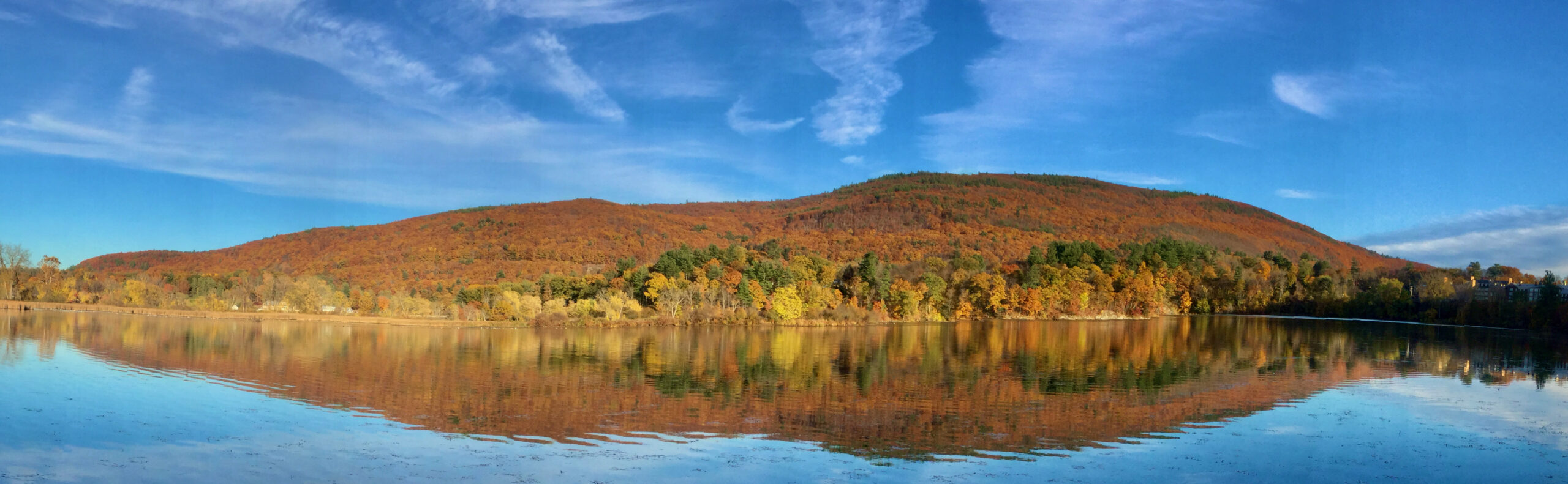
Foremost among Brattleboro’s many striking geographical features is Mount Wantastiquet. Rising some 1300 feet above sea level in Chesterfield, New Hampshire, the mountain looms over downtown Brattleboro from across the Kwenitekw/Connecticut River—a long, lush shoulder glittering green in spring and summer, burning red, orange, and gold through autumn, and blanketed white in winter.

Continue reading

Fort Dummer, by Jessica Nolan

By JESSICA DOLAN One of the historical sites in Brattleboro that is a key site for Indigenous history, and the history of competition between England and France to settle North America, is Fort Dummer. The history of Fort Dummer takes us into the beginning of the 18th Century, at a time when Sokokis, other Abenakis, and their Northern Seven Nations allies were trying to contain the English within the bounds of their existing colonies of Massachusetts, Connecticut, Rhode Island and New Hampshire, and prevent them from settling more Indigenous land to the North and West. Fort Dummer was the first European settlement in what later became Vermont; it was considered by the English to be a northern and western “frontier” of wilderness and Wabanaki territory. And yet, there is not much information about the fort, its land, and its site offered to residents or visitors of Brattleboro. During the time that it was built and […]

Continue reading

Construction of BUHS – The Brattleboro Union High School

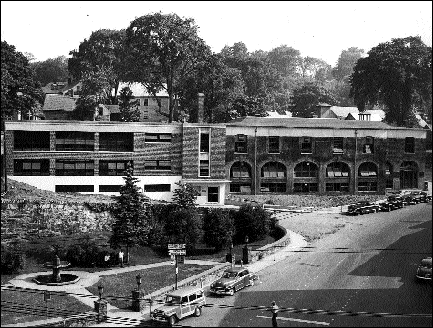
This week in Brattleboro History we are traveling back seventy years, to June 21, 1949. It was on this date that Brattleboro voted to build a new high school on the fairgrounds. The old high school was on Main Street and many thought it was inadequate. There was no gym or auditorium. The classrooms were crowded. Parking was challenging and the heating system did not function very well. As one letter writer to the Reformer wrote, “It has been thirty years since the residents of Brattleboro first started talking about the need of a new high school…In the meantime, the nature of the world and the town of Brattleboro has changed immeasurably. Certainly those changes have not decreased the need for the kind and size of building required to give this town, its children and their teachers, a decent break”. The Main Street high school was built in 1884. In 1949 the Reformer did a […]

Continue reading
An aerial photograph of the Holstein Association in downtown Brattleboro.

The Holstein Association

Since 1903, the largest dairy breed organization in the world has been headquartered in downtown Brattleboro. Still going strong over 100 years after its founding, Holstein Association USA is the central information hub for dairy producers all across the country, maintaining the records for all ancestry, identity, ownership and performance information on more than 22 million Registered Holstein cattle—the United States’ most popular diary breed.

Continue reading

The Valley Fair

The Valley Fair in Brattleboro began in 1886. It was held for one day in the 2nd week of October and had over 5000 attendees. Farmers exhibited cattle, horses, poultry, sheep, pigs, dogs, fruits and vegetables, and many ribbons were awarded. It was an agricultural fair and the local organizers prided themselves on keeping the event alcohol-free, family friendly and without the Midway or carnival-like attractions that others incorporated into their events.

Continue reading

Neighborhoods: Centreville

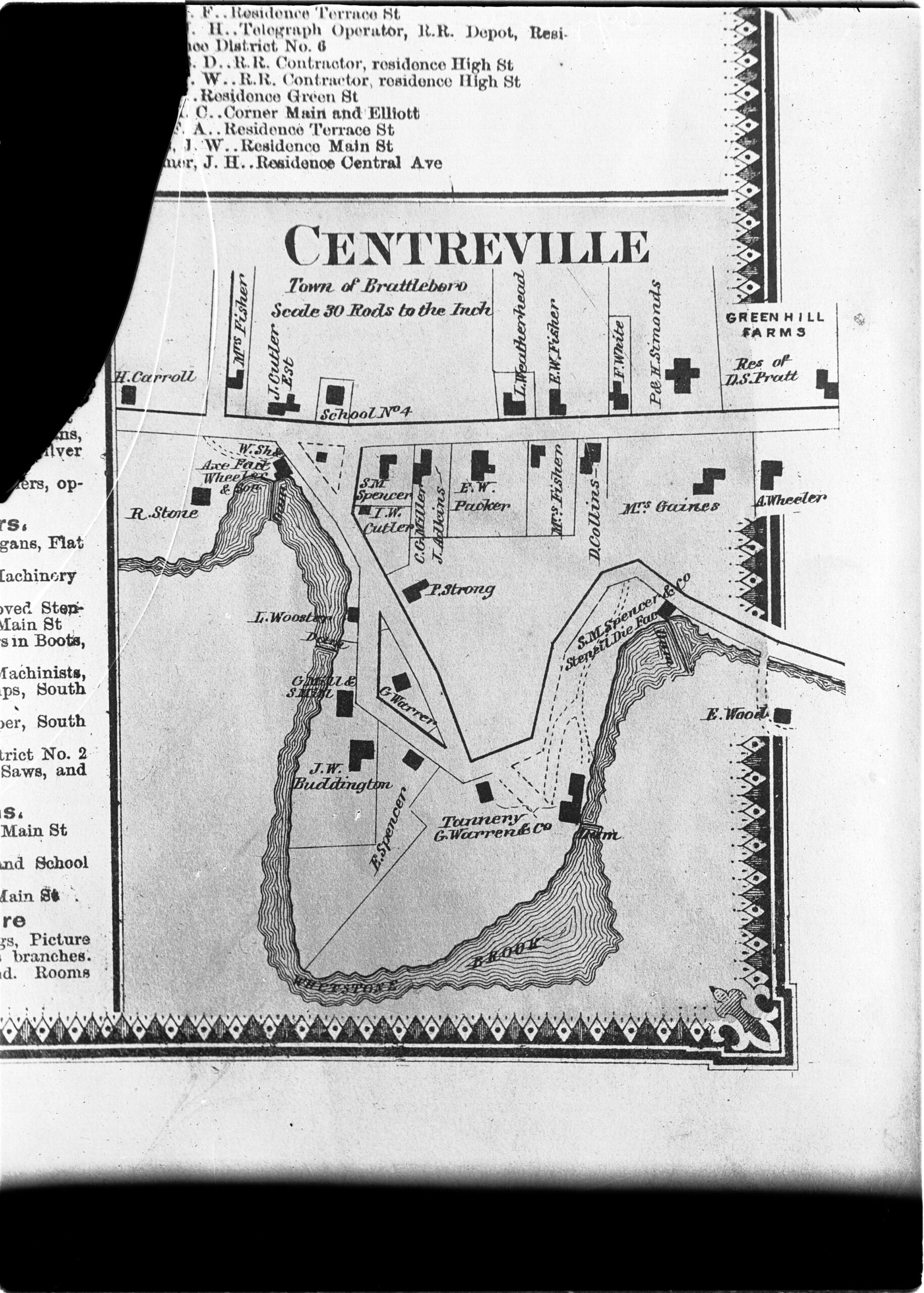
SINCE 1860 – The (Nearly) Forgotten Centreville is a nearly forgotten neighborhood located mainly on Western Avenue, the busy Vermont Deli thrives today in the heart of it. Extending along Western Avenue from approximately I-91, Exit 2 to the Creamery Bridge, it includes Guilford Street to Elm Corners (intersection of Maple St. and Guilford St.) and the western end of Williams Street. The first mention of Centreville in newspapers was an 1855 in an advertisement. Centreville was once such a thriving community on its own that it was labeled as prominently as both its neighbors to the east (Brattleboro) and west (West Brattleboro) as early as 1860. Above section taken from 1860 C. W. Grau Map, 1860. THRIVING COMMUNITY Centreville once had thriving industries which included several large mills, farms and of course Centreville Store. Reminiscences BHS Trustee Karen Davis recently reminisced with other board members of life growing up in Centreville and we’d like […]

Continue reading
Collapsed Bridge to Hinsdale - 1921

Hinsdale Bridge

The Hinsdale Bridge Collapse Saturday, March 28, 1920 the Hinsdale Bridge between Brattleboro and Island Park collapsed into the Connecticut River. The winter had produced a great deal of snow, a warm spell caused a quick melt, and eight to ten inches of ice were still on the river. The Brattleboro Daily Reformer gave the following description of what led to the bridge collapse. March 28, 1920 “The effect of the warm sun on the superabundance of snow in the woods was beginning to be felt…Brooks swollen by the contents of other brooks fed by smaller tributaries had been pouring into the Connecticut River for days, and the accumulated volume reached flood proportions…The ice jam at East Putney broke away about 5 o’clock, snapping off trees on the river banks as though they were toothpicks in a giant’s hand. When the river here began filling…it was known that the East Putney jam had arrived…With the […]

Continue reading